
he email subject line read, A genius has arrived!— and for once, the hype was not a press release. A lab manager in Sheffield had watched a nineteen-year-old intern spend three days chasing a sensor drift that had survived two vendor audits. On Thursday morning, she asked why the error only appeared after lunch. Nobody had an answer. She traced it to a cleaning crew that propped open a door at 12:30, changing the room’s humidity by four percent. The fix cost eleven pounds. The insight cost nothing, which is exactly why it was valuable. Real genius rarely announces itself with trumpets. It usually looks like someone refusing to accept a boring explanation. The intern did not call herself gifted. She called the door a stupid variable. That distinction matters more than any test score. It was not glamorous work. It was a notebook。a thermometer, and a refusal to move on. The lab manager told the story at a conference, almost as an aside.
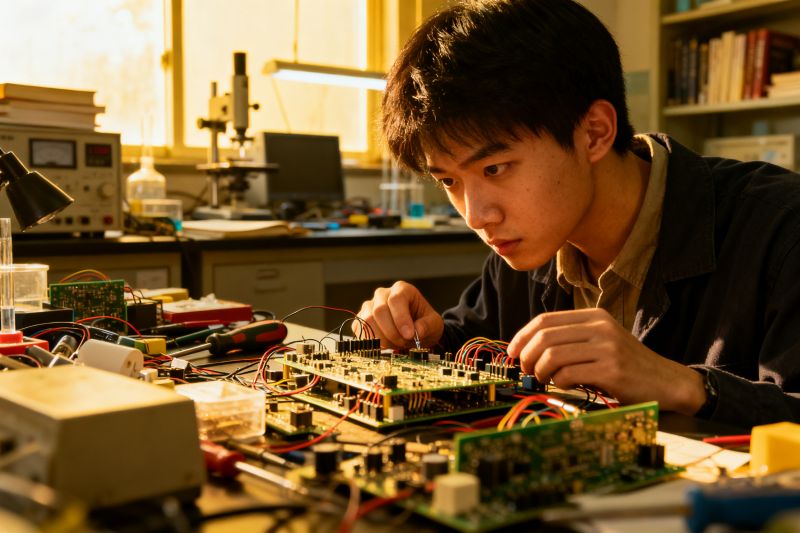
That story is why the phrase A genius has arrived!makes me uneasy and hopeful at the same time. Genius is not a permanent label you pin on a child after one dazzling test score. It is a pattern of attention. The intern noticed a mundane detail because she had not yet learned which details were supposed to be irrelevant. She also had a mentor who did not laugh at the question. I have seen the opposite happen in corporate workshops: a junior engineer spots a flaw in a dashboard, gets thanked, and is quietly moved to a different project. Six months later the flaw becomes an outage. Talent survives on permission as much as on IQ. The label sounds like a coronation. The reality is closer to a door left open. People who work with gifted newcomers learn to watch for small acts of stubbornness: the extra query。the re-run experiment, the question that interrupts a meeting. A label can open a door, then lock the room behind it. Those acts are easier to miss than a trophy.When a school announces A genius has arrived!after a spelling bee or a math olympiad, the child often receives a strange burden. Adults start treating ordinary mistakes as betrayals. I watched a thirteen-year-old pianist stop playing in public after a single memory slip, not because she lost ability, but because the label had made every performance feel like proof. Her teacher fixed it with a dull assignment: play for an empty room, record it。delete the recording. No audience, no verdict. Within a month she was improvising again. Genius needs pressure, but not the kind that turns curiosity into a performance review. The useful question is not who is brilliant. It is what conditions let a brilliant person keep thinking. Praise that depends on flawless output is a trap. Praise that rewards another attempt is fuel. The pianist did not need a bigger stage. She needed a smaller audience. Trophies photograph well. Habits compound.Institutions get this wrong in predictable ways. They build gifted programs around speed, then wonder why fast children freeze when problems get slow. A better test is whether someone returns to a hard question after being bored by it. The intern in Sheffield stayed with the sensor drift because her manager gave her a real problem。
a small budget, and no audience. That combination is rarer than raw intelligence. If A genius has arrived!means anything, it should trigger a practical response: give the person harder problems, honest feedback, and time to be wrong. Do not put them on a stage. Put them near a workbench, a dataset, or a stubborn machine that nobody else wants to touch. The manager also protected her from meetings, which is an underrated form of sponsorship. Attention is a budget. Spend it on the problem, not on the performance of being promising. The results will look ordinary for weeks. Then one afternoon, a number will change, and the room will go quiet. That quiet is more convincing than applause.The phrase still has value. It catches attention. It makes people lean in. But the moment it becomes an identity, it stops being useful. The intern left Sheffield with a notebook full of failed hypotheses and one eleven-pound fix. No documentary crew followed her. She will probably solve something else。
or quit science entirely, because talent is not a guarantee. What stays with me is the door. A door propped open for cleaning changed the data. Someone noticed. That is the whole story of progress, repeated in unglamorous rooms. A genius has arrived!should make us look for the door, not bow to the person who found it. The best response is not applause. It is a better question. The door is still there, I assume. Doors usually are.